
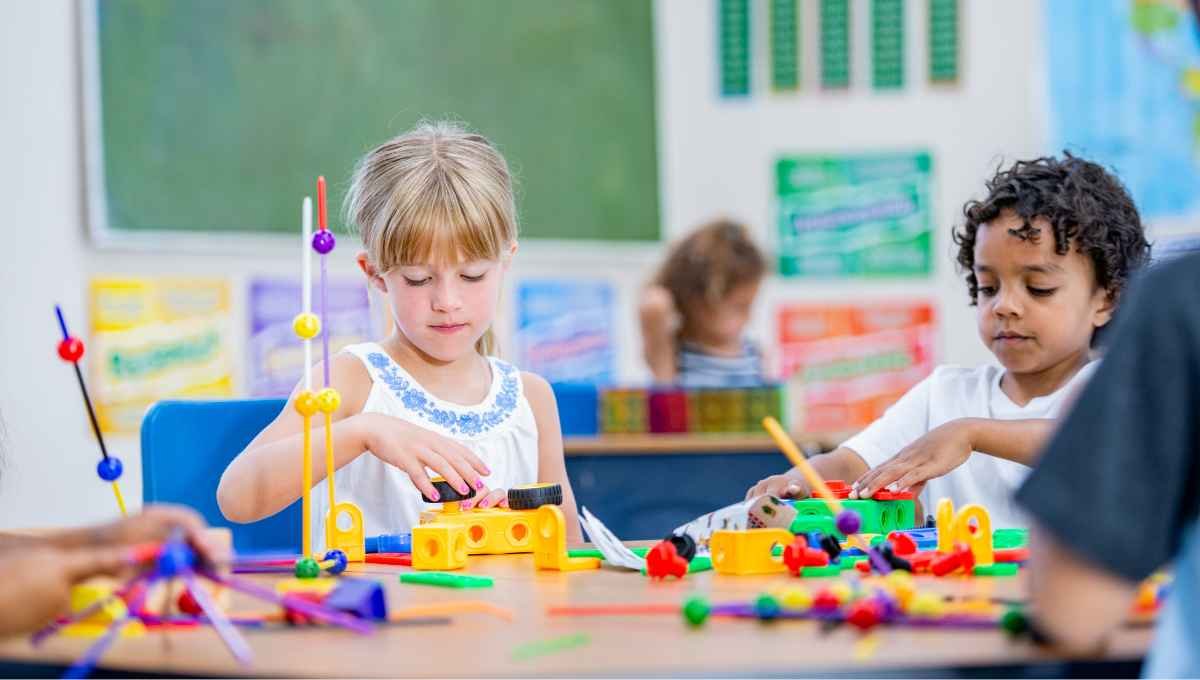
Simply Fun’s preschool collection includes 28 games for children ages 3 and 4, with some games also marked for ages 2+ or 4+. Families can browse by learning focus, including counting, colors, shapes, letters, storytelling, memory, communication, fine motor skills, and gross motor skills.
Many games list short play sessions, often from 10 to 30 minutes, which can be a manageable fit for preschool routines. Games are most meaningful when adults play alongside children, encourage conversation, and adapt the experience to the child’s interests.
The best choice is not necessarily the game with the most rules. It is the one that fits a child’s age, attention span, preferred play style, and current interests.
Finding a game that is both fun and appropriate for a preschooler can take more time than families expect. Parents and educators often want an alternative to passive screen time, but they also need activities that feel simple, hands-on, and genuinely enjoyable. The collection of learning games for preschoolers from SimplyFun provides a focused place to compare games for early math, language, movement, memory, creativity, and social play.
Rather than treating game time as a replacement for preschool instruction, consider it an opportunity for short, repeatable learning moments. A child can practice naming colors, waiting for a turn, following directions, or telling a story while still experiencing the activity as play.
Why SimplyFun Can Make Choosing Preschool Games Easier
Preschoolers are developing rapidly, but their interests and attention spans can vary greatly from one child to another. A game that works well for a child who loves matching cards may not suit one who prefers moving, building, or telling stories. Simply Fun organizes its preschool collection by age and offers filters for learning categories, player counts, price, and selected learning considerations.
The collection includes options for independent play as well as games for small groups and families. That variety can help adults choose an activity for a quiet one-on-one moment, a classroom center, or a family game night. Listed play times commonly range from 10 to 30 minutes, giving families a practical way to fit a game into a morning routine, after-school transition, or bedtime wind-down.
How Play Can Support Early Learning
Young children learn through active experiences, especially when they can make choices, handle materials, communicate their ideas, and receive supportive guidance. Research on playful learning in early childhood settings describes how purposeful play can connect learning goals with children’s active participation.
A game by itself does not guarantee academic progress. The value comes from the full experience: the child’s interest, the opportunity to repeat a skill, and an adult who notices what the child is doing. Asking, “How did you know those pieces matched?” can be more useful than immediately supplying the answer. Adults can also simplify a rule, slow the pace, or repeat a favorite round when that helps a child stay engaged.
Simply Fun Games for Early Math Concepts
Preschool math is about much more than reciting numbers. Children begin to notice patterns, compare objects, sort by attributes, and connect number words to real quantities. Several Simply Fun games offer playful ways to explore those early ideas.
Counting, Colors, and Shapes
- Share a Berry is listed as an early-counting and fine-motor game for ages 3 and up. Adults can invite children to count slowly, touch each item as they count, and notice whose turn comes next.
- Uncle Berry’s Bedtime is an early counting game for ages 3 and up, with a listed 15-minute playtime. Its simple format can help connect number practice with a story-based routine.
- My Fun Shapes uses blocks and cards for exploring colors and shapes. Children can name, sort, compare, and manipulate the pieces during a short activity.
- Chums focuses on color and shape matching for ages 4 and up, while Crazy Ates combines number and color recognition for the same age range.
Games That Encourage Language and Communication
Language grows through conversation, listening, describing, and imaginative expression. SimplyFun’s preschool filters include categories for letters, spelling, storytelling, vocabulary, vowels, and communication, allowing adults to select a game based on a specific language interest.
- Rooby’s ABCs is designed for letter recognition and alphabet sequencing. It is listed for 1 to 4 players, ages 3 and up, with a 10-minute playtime.
- Tibbar’s Little Hands, Big Smiles is a hands-on game connected with shapes and letters for ages 3 and up.
- Wake Up Stars is categorized around communication and invites players to tell stories and share feelings.
To extend the learning, adults can ask a child to name a letter, describe a picture, create a sentence, or explain a choice. These prompts keep the child involved without turning play into a quiz.
Social, Emotional, and Physical Skills Through Game Play
Letters and numbers are important, but preschool learning also includes cooperation, self-expression, memory, movement, and confidence. A well-chosen game can give children low-pressure opportunities to practice these skills with others.
- Animal Snacks is listed as a turn-taking game for two to five players ages 3 and up.
- Aargh! is a pirate-themed memory game for ages 3 and up that can also prompt imaginative conversation about characters and adventures.
- Buddy Hop combines memory and gross motor activity for children ages 4 and up.
- Dance Like A Lemur is another gross motor option for ages 4 and up, with a listed 15-minute play time.
These games should be viewed as opportunities to practice, not as therapeutic tools or guaranteed developmental interventions. For many children, the most helpful approach is simply having an adult model patience, celebrate effort, and make room for a second try.
How to Choose the Right Game for a Three- or Four-Year-Old
- Begin with the recommended age. Use it as a starting point, then consider the child’s experience with rules, pieces, and group play.
- Pick one main interest. Choose counting, colors, letters, movement, memory, storytelling, or turn-taking rather than trying to cover every skill at once.
- Match the time commitment. A short game can be easier to begin and easier to repeat.
- Consider the player count. Some children enjoy independent activities, while others are motivated by playing with a sibling, parent, or classmate.
- Follow the child’s play style. A child who enjoys physical action may respond better to movement games than to a seated card game.
- Review how the game works before purchasing. Looking at the objective, pieces, and basic rules can help adults anticipate whether it will fit their setting.
Turn Game Time Into Guided Learning
Small changes can make game time more interactive. Before starting, name a simple goal, such as finding shapes or practicing turns. During play, use open-ended questions: “What do you notice?” “What could happen next?” or “Can you show me another way?” Afterward, connect the idea to everyday life by counting snacks, spotting letters on a sign, sorting laundry by color, or retelling part of the game’s story.
Keep the atmosphere flexible. If a rule is too difficult, change it. If a child wants to play the same round again, let repetition do its work. When games remain enjoyable and achievable, children are more likely to return to them willingly.
Making Simply Fun Part of a Weekly Routine
- Monday: Choose a counting, color, or shape activity for a brief one-on-one session.
- Tuesday: Play again and let the child explain one rule or choice.
- Wednesday: Add a language activity by naming pieces or creating a short story.
- Thursday: Try a movement or memory game that includes following directions.
- Friday: Let the child choose a favorite game and lead part of the play.
Simply Fun provides families and educators with a practical starting point for selecting preschool games. Choose an age-appropriate option, focus on a skill the child enjoys practicing, and keep the experience playful. Over time, those short sessions can become a familiar way to explore early math, language, movement, communication, and social skills together.