
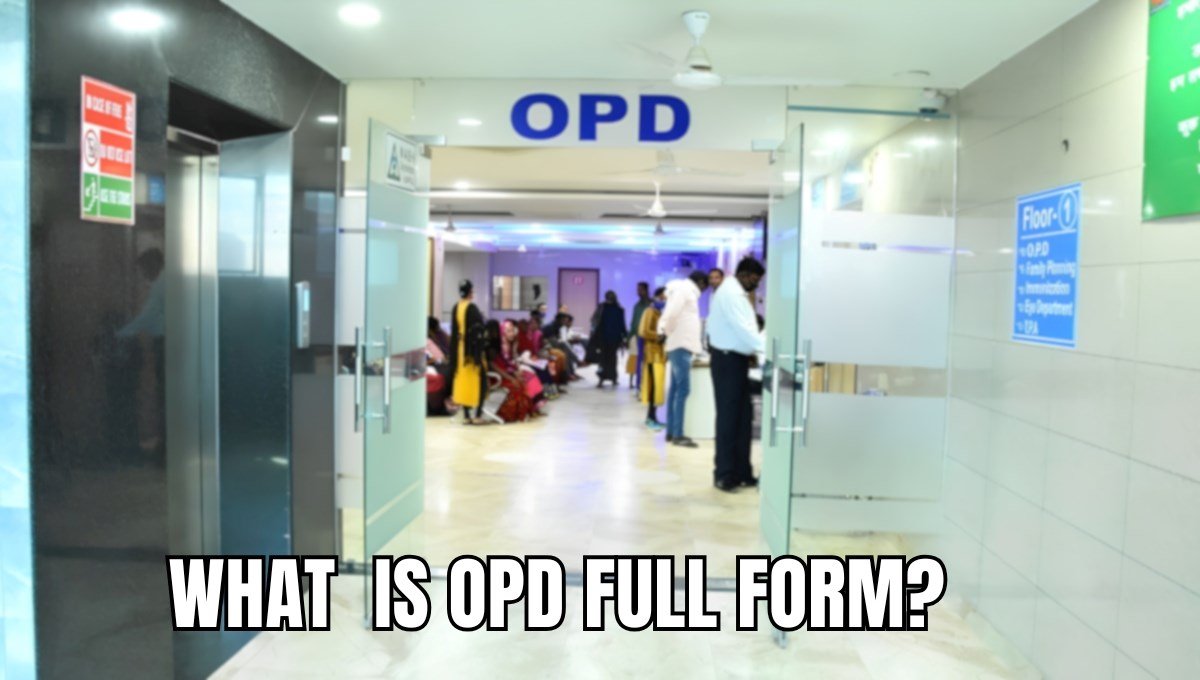
The full form of OPD is Out Patient Department. An area in a hospital or health service provided where physician consultations, simple examination, medical advice and treatment can be obtained without admission to the hospital. OPD services are regularly accessed for common health issues, follow-up care, specialist consultation, minor procedures and diagnostic tests. Patients typically come into the hospital, register, meet with the doctor and go home after treatment or counselling. Nearly all the government and private hospitals have OPD facilities. In this article you will read about OPD full form, meaning, types, services, registration, benefits, charges and difference between an OPD and IPD.
What is OPD?

Out Patient Department (OPD) is the section of a hospital where patients seek medical advice and treatment but do not stay in the hospital at night. Patients may be seen in the OPD for a new health concern, or to review treatment recommended at a previous visit. The physician might do an examination, medication, diagnostic tests, or refer the patient to another specialist depending on the symptoms. In cases where a patient needs the use of a hospital for monitoring, surgery or long-term treatment, the doctor may suggest admission to a hospital.
OPD Full Form and Meaning
| Term | Details |
| OPD | Outpatient Department |
| Patient Type | Outpatient |
| Admission | Usually not required |
| Main Purpose | Consultation and treatment |
| Common Services | Examination, tests, medicines and follow-up |
| Available At | Government and private hospitals |
How Does an OPD Work?
OPD system is aimed to help provide medical help without requirement of hospital admission. The exact procedure varies with each hospital, but the general steps are generally the same.
The first step in the wheels turning on the patient is to register at the hospital and choose the desired department/doctor. Patient receives a token or an appointment, and waits for the consultation.
The doctor will then listen to the patient’s symptoms and medical history, and conduct an examination. If further investigation is needed, the doctor might order blood tests, scans, X-rays or another diagnostic test.
The doctor may make a diagnosis after reviewing the information, then make a drug prescription, lifestyle recommendation, procedure recommendation or follow up appointment.
Why is OPD Used?
The OPD services are intended for patients who require medical help, but not hospitalisation. Typically, a person would see an OPD for general or specialist consultation, routine check-up on health and wellbeing, follow-up visits, minor injuries, diagnostic evaluations, medication prescription and assessment of existing health care treatments. In addition, an OPD may be able to provide medical documentation and pre-surgical consultations. Outpatient care allows hospitals to offer medical care to more people without overspending their beds and avoid creating unnecessary beds and bedsides.
Types of OPD
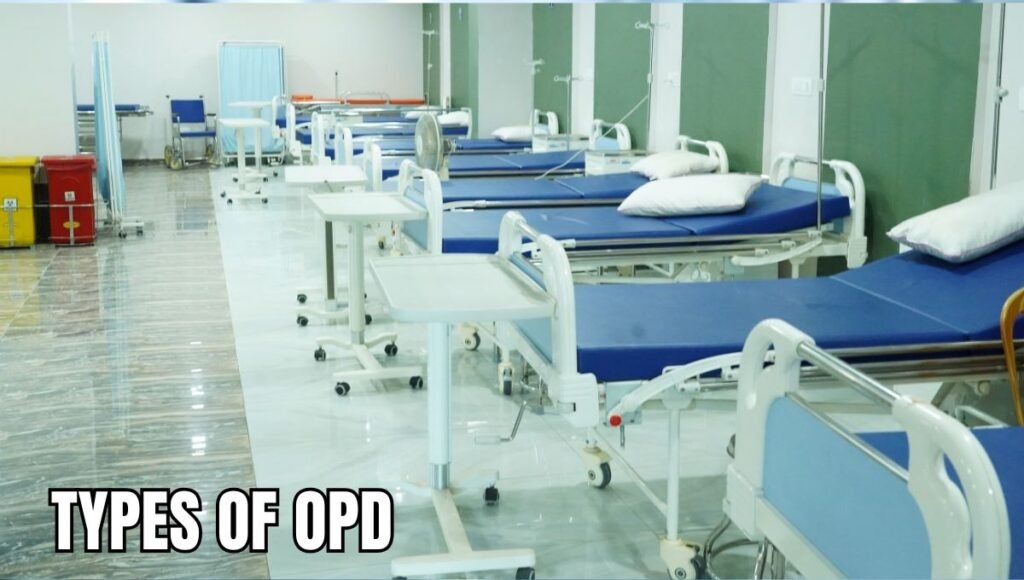
Some hospitals can have different OPDs for different medical specialties as well as according to the patient’s needs.
| OPD Type | Main Focus |
| General Medicine OPD | Common illnesses and medical conditions |
| Paediatric OPD | Healthcare for children |
| Orthopaedic OPD | Bones, joints and muscles |
| Dermatology OPD | Skin, hair and nail conditions |
| Dental OPD | Teeth and oral health |
| Gynaecology OPD | Women’s reproductive health |
| Surgery OPD | Surgical consultation and evaluation |
| ENT OPD | Ear, nose and throat conditions |
| Ophthalmology OPD | Eye-related problems |
| Cardiology OPD | Heart and cardiovascular conditions |
| Neurology OPD | Brain and nervous system conditions |
| Psychiatry OPD | Mental and behavioural healthcare |
The availability of departments depends on the size and specialization of the hospital.
General OPD
Patients commonly visit their GP for common health issues. Symptoms, past medical history are reviewed and treatment is provided based on the findings from basic examinations. Patients may be referred to another department if care is needed that is more specific. Typical cases presenting to a General OPD include fever, cough and cold, headache, digestive issues, weakness, minor infections, and general health issues.
Specialist OPD
A Specialist OPD is a medical consultation unit for specific health conditions, and specific body systems. Patients can go to a bone and joint clinic (OPD) or a heart clinic (OPD) or a skin clinic (OPD). They enable a patient to get an expert opinion and treatment from doctors who specialize in specific areas of healthcare.
How to Register for OPD
There are a few steps involved in the registering process for OPD.
- Go to the Hospital: Go to hospital where you want to see a doctor.
- Locate the OPD Registration Section: Registration desk or OPD registration section.
- Produce Details: Enter your name, age, address and contact number.
- Present Documentation: Present an identity paper and medical history, as necessary.
- Select Department: Choose the appropriate OPD or medical specialty.
- Pay Registration/Consultation fee, as applicable.
- Get Registration number/Token/Acknowledgment slip: Accept the registration no/token/acknowledgment slip.
- Meet the Doctor: Go to the consultation room when your Token or Appointment is called.
- Take any recommended diagnostic tests – Complete Tests if Advised:
- Collect Prescription: Adhere to the doctor’s treatment and follow up plan.
Documents needed for OPD
The documents that are needed may be different in different hospitals. But the following is usually needed for patients:
| Document | Purpose |
| Aadhaar Card or ID | Identity verification |
| OPD Registration Card | Patient identification and hospital records |
| Previous Medical Reports | Helps doctor understand medical history |
| Prescription Records | Shows previous treatment |
| Health Insurance Card | Required where applicable |
| Referral Letter | May be required for specialist consultation |
| Appointment Details | Confirms scheduled consultation |
There are a variety of health care services available in the OPD depending on the department of the hospital. Common services include:
- Doctor consultation
- Physical examination
- Specialist consultation
- Prescription of medicines
- Follow-up care
- Basic medical procedures
- Diagnostic test recommendations
- Health counselling
- Referral to other departments as relevant.
- Pre-operative evaluation
Some hospitals can also offer laboratory and imaging services at its OPD or near the OPD.
OPD Consultation

At an OPD visit, the doctor asks general questions about the patients symptoms and medical history, any medicines the patient is taking and more. The doctor will then make a physical examination and decide if additional tests are required. If it is found, the patient may be given:
- Medicines
- Diagnostic test recommendations
- Lifestyle advice
- Specialist referral
- Follow-up instructions
- Hospital admission advice, if necessary
OPD Charges
The fees for OPD Consultation are different based on the hospital, department, doctor and the place of the hospital.
The charges of OPD in government hospitals are very low or if there is any public health scheme, it provides OPD service at low rate, and in private hospitals, consultation and other service charges are applicable. Extra fees charged for:
- Laboratory tests
- X-rays
- CT scans
- MRI scans
- Medicines
- Minor procedures
- Specialist consultation
Hospital fee structure should be discussed with a patient before they can go to the hospital.
Benefits of OPD
- Patients and hospitals benefit from the services in OPD in many ways.
- No long-term hospital stays: Treatment given, and they go home!
- Lower treatment costs: As a general rule, the cost of treatment in OPD is lower than the cost of hospitalisation.
- Easy specialist access: Patients can see specialists from other specialties.
- Follow-up care: The doctor will have regular check-ups to provide ongoing monitoring of treatment progress.
- Less hospitalisation: If the hospitalisation is not required, treatment can be done through OPD services.
Limitations of OPD
- While useful, OPD services may sometimes not be appropriate for all healthcare situations.
- Admission may be necessary for the patients that need continuous monitoring.
- Emergency conditions are those that need urgency treatment by an ED.
- Certain procedures cannot be safely carried out in the OPD.
- Expect long wait times to see a doctor in crowded hospitals.
- Several visits and tests may be necessary for complex cases.
- Depending on the patient’s state the doctor decides if the patient needs outpatient therapy or not.
OPD vs IPD
There are two different hospital services: OPD and IPD. The only difference is that the patient must either be admitted to a hospital or not.
| Parameter | OPD | IPD |
| Full Form | Outpatient Department | Inpatient Department |
| Admission | Usually not required | Required |
| Hospital Stay | Short visit | Usually one or more days |
| Treatment | Consultation and outpatient care | Continuous medical care |
| Bed Required | Generally no | Yes |
| Monitoring | Limited | Regular or continuous |
| Cost | Generally lower | Usually higher |
| Suitable For | Routine and follow-up care | Conditions requiring hospitalization |
OPD vs Emergency Department
OPD should not be confused with the emergency department.
| Feature | OPD | Emergency Department |
| Purpose | Routine medical care | Urgent medical care |
| Appointment | Often required | Usually not required |
| Waiting | May be applicable | Priority based on severity |
| Cases | Non-emergency conditions | Serious or urgent conditions |
| Admission | Usually not required | May be required |
Conclusion
The full form of OPD is Outpatient Department. It is one of the integral components of hospital healthcare where the patient receives medical consultation, diagnosis, treatment and follow up care without having to stay in the hospital. OPDs are held on all subjects like general medicine, orthopaedics, paediatrics, dermatology, cardiology, dentistry etc.
Usually, the OPD process contains the following stages—Registration, consultation, examination, diagnostic tests as needed, treatment, and follow-up. It is acceptable for non-ICU patients. Patients can choose the right health care services with the knowledge of the difference between OPD and IPD and Emergency services.
FAQs
A1. The Outpatient Department is referred to as OPD.
A2. No, usually no hospital admission but patients are consulted and treated.
A3. The doctor checks the patient, reviews symptoms, suggests tests (if needed), and offers treatment or additional recommendations.
A4. In OPD, treatment is delivered without admission and in IPD, the treatment is given during the period of hospitalisation.
A5. Yes. The facility of OPD is provided by government hospitals but the departments, time and charges vary from hospital to hospital.
Also Read: PCS Full Form and Meaning: Eligibility, Exam, Salary and Career