
IAT is an important entrance examination for students who are pursuing undergraduate science courses. The term IAT commonly refers to the IISER Aptitude Test, an entrance examination for students who are interested in pursuing undergraduate science and research-oriented programmes. The examination caters to students interested in Physics, Chemistry, Mathematics, and Biology. It provides an opportunity to study science at reputed institutions and develop the knowledge and research skills required for careers in scientific research, higher education, and technology.
What Is the Full Form of IAT?
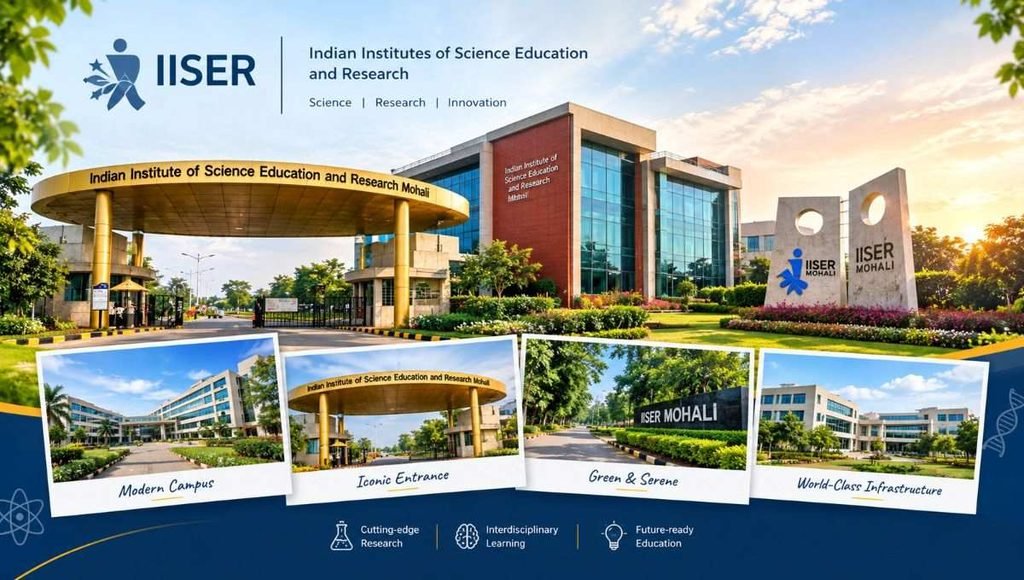
The full form of IAT is the IISER Aptitude Test. It is a national-level entrance examination for admission into undergraduate science and research programmes of participating IISER campuses.
The Indian Institutes of Science Education and Research are autonomous institutions which focus on science education and research. They provide programmes which enable students to develop a strong understanding of scientific concepts and acquire practical research experience. Unlike examinations that focus mainly on engineering or medical admissions, IAT provides a pathway for students who wish to explore different scientific disciplines. Depending on their eligibility and participating programmes, candidates can apply for degrees in science, mathematics, computational fields, and other related areas.
IAT 2026: Overview
The 2026 examination was scheduled for 7 June 2026. Candidates preparing for the next admission cycle should refer to the official website for the announcement of the IAT 2027 schedule rather than assuming that the previous year’s dates will remain unchanged. The following table presents a quick overview of the IISER Aptitude Test for the 2026 admission cycle.
| Particulars | Details |
| Exam name | IISER Aptitude Test |
| Full form | IISER Aptitude Test |
| Common abbreviation | IAT |
| Conducting authority | IISER Joint Admissions Committee |
| Purpose | Admission to eligible undergraduate programmes |
| Examination mode | Computer-based test |
| Subjects | Physics, Chemistry, Mathematics and Biology |
| Total questions | 60 |
| Total marks | 240 |
| Examination duration | 3 hours |
| Question type | Multiple-choice questions |
| Examination language | English and Hindi |
| Participating institutions | IISER campuses |
| Official website | iiseradmission.in |
What Is the Purpose of the IAT Exam?
The main objective of IAT is to choose eligible students for the undergraduate programmes of the participating IISERs. These institutes are committed to building students’ scientific understanding, analytical thinking, and research skills. Their academic programmes provide a combination of theory, laboratory activities, practical assignments, and research opportunities. Students who are passionate about understanding how the natural world works can pursue their interests by taking up IAT after completing Class 12.
For instance, students interested in Biology can specialise in Life Sciences, whereas those who want to acquire the theoretical knowledge and practical skills to pursue Physics or Mathematics at advanced levels can prepare accordingly. Students interested in computing, data science and other interdisciplinary areas should review the specific academic programmes offered by these participating institutions.
IAT is ideal for students who wish to pursue higher studies in science, rather than follow the traditional route of engineering or medical studies.
IAT Eligibility Criteria
Candidates must meet the eligibility criteria laid down for the year of examination. These include the qualifying examination, subjects studied, and minimum aggregate marks.
Educational Qualification
For IAT 2026, students who had passed the Class 12 examination or equivalent qualifying examination in 2024, 2025 or 2026, including those appearing in the examination for 2026, were eligible to apply against the stated eligibility conditions.
Students who had passed their qualifying examination in 2023 or earlier were not eligible for IAT 2026 admission as per the general rules. The qualifying examination must be recognised by the relevant authorities as mentioned in the official admission brochure.
Required Subjects
Students who wish to apply for the five-year BS-MS programmes generally need to have studied at least three subjects from the following list.
- Physics
- Chemistry
- Mathematics
- Biology
However, some programmes have additional subject requirements. For instance, Mathematics is a mandatory subject for several specified programmes, including selected computational, engineering, economic and statistical courses. Candidates should review the eligibility requirements of their desired programmes before applying.
Minimum Marks
For IAT 2026, the minimum aggregate requirement for students was 60% or an equivalent grade in the qualifying examination. Students belonging to SC, ST, and PwD categories were required to achieve a minimum of 55%, according to the official rules. Students should calculate their aggregate marks as per the method mentioned in the admission brochure.
Important: These are the eligibility requirements for admission in 2026. Students applying in 2027 must review the new brochure as the qualifying years, minimum marks, or other eligibility criteria may change.
IAT Exam Pattern
Students must gain an understanding of the IAT exam pattern to prepare themselves accordingly and utilise the available time during the examination efficiently. The 2026 examination contained 60 multiple-choice questions, with 15 questions each for four subjects.
| Subject | Number of Questions | Maximum Marks |
| Physics | 15 | 60 |
| Chemistry | 15 | 60 |
| Mathematics | 15 | 60 |
| Biology | 15 | 60 |
| Total | 60 | 240 |
Candidates will get four marks for every correct answer. The examination will deduct one mark for every wrong answer, and an unanswered question will fetch the candidate zero marks. The total time allotted for the examination is 180 minutes.
This marking scheme highlights the significance of accuracy. Students are advised to not attempt any guesses and must understand the difference between answerable and unanswerable questions.
As all four subjects are assigned equal marks, candidates are recommended to choose the subject of their choice without jeopardizing the overall score.
How to Apply for IAT
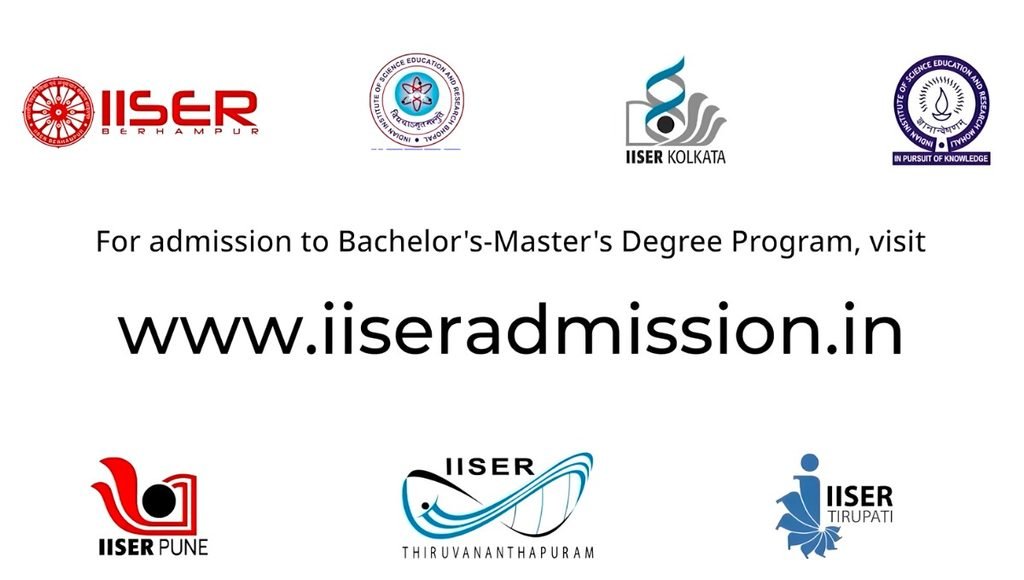
In order to apply for the examination, candidates will have to register themselves on the official IISER admissions portal during the time of application.
The below-mentioned steps will help students understand the process of applying for the examination.
- Step 1: Go through the official website. Navigate to the official IISER admissions website and locate the exam year notification.
- Step 2: Check the information brochure. Go through the eligibility criteria, important dates, examination pattern, documents, and programme-specific requirements.
- Step 3: Register. Register on the official portal by filling out the details as mentioned in the application window. Fill the personal details form accurately.
- Step 4: Fill the application form. Candidates must fill the application form by providing all the details such as academic qualifications, information about the qualifying exam, and other details as mentioned on the portal.
- Step 5: Upload the required documents. Candidates are required to upload photographs, signatures, certificates, and other necessary documents.
- Step 6: Pay the application fees. Make the payment of the application fee prescribed by the official authority. The fee varies according to the candidate’s category and the guidelines for the relevant academic session.
- Step 7: Submit the application. Submit the application form after rechecking all the details, and save the printout and the application number for future reference.
Candidates are advised to go through the guidelines as provided by the official source. An incomplete application can damage the chances of being considered for admission.
IAT Admission Process
Candidates must complete the following steps to secure admission through IAT:
- Register for admission: Visit the official admission portal and follow the registration instructions.
- Appear for IAT: Take the IISER Aptitude Test (IAT) as per the official examination schedule.
- Check the merit list: Review the merit list and rank details that the examination authority releases according to official guidelines.
- Check the results: Visit the official portal to check your IAT results and shortlist status.
- Fill in your choices: Select your preferred IISERs and programmes according to the official counselling instructions.
- Check seat allotment: Review your seat allotment based on your rank, category, and programme preferences.
- Accept the allotted seat: Complete the seat acceptance formalities within the specified deadline.
- Pay the required fee: Pay the seat acceptance fee, if applicable, and follow the official payment instructions.
- Complete document verification: Submit the required documents and complete all admission formalities within the given timeframe.
- Track important dates: Check the official website regularly for counselling schedules, deadlines, and admission updates.
- Review closing ranks: Check the available closing ranks and counselling guidelines to understand your admission chances for different programmes.
Note: A qualifying IAT score does not guarantee admission to a particular IISER or programme. Candidates must meet the eligibility requirements, follow the counselling process, and secure a seat according to the applicable admission criteria.
Participating IISERs
The IISER system includes seven institutions that offer science education and research opportunities.
| IISER | Location |
| IISER Pune | Pune, Maharashtra |
| IISER Kolkata | Mohanpur, West Bengal |
| IISER Mohali | Mohali, Punjab |
| IISER Bhopal | Bhopal, Madhya Pradesh |
| IISER Thiruvananthapuram | Thiruvananthapuram, Kerala |
| IISER Tirupati | Tirupati, Andhra Pradesh |
| IISER Berhampur | Berhampur, Odisha |
IAT Syllabus
| Subject | Important Topics |
| Physics | Mechanics, Laws of Motion, Work and Energy, Thermodynamics, Waves, Electrostatics, Current Electricity, Magnetism, Optics, Modern Physics |
| Chemistry | Atomic Structure, Chemical Bonding, Periodic Table, Thermodynamics, Equilibrium, Electrochemistry, Chemical Kinetics, Organic Chemistry, Coordination Compounds |
| Mathematics | Sets, Functions, Trigonometry, Complex Numbers, Permutations and Combinations, Calculus, Matrices, Vectors, Probability, Coordinate Geometry |
| Biology | Cell Biology, Plant and Animal Physiology, Genetics, Evolution, Reproduction, Human Health, Biotechnology, Ecology, Diversity of Living Organisms |
Note: The IAT syllabus generally covers Class 11 and 12 science topics. Check the official IISER Admissions website for the complete syllabus applicable to your examination year.
Best Books for IAT Preparation
Choosing suitable study materials can help candidates prepare systematically. The following resources provide a practical starting point.
| Subject | Recommended Resources |
| Physics | NCERT Class 11 and 12 Physics; additional numerical practice books |
| Chemistry | NCERT Class 11 and 12 Chemistry |
| Mathematics | NCERT Class 11 and 12 Mathematics; problem-solving practice books |
| Biology | NCERT Class 11 and 12 Biology |
| All subjects | Official syllabus and previous-year question papers |
IAT Preparation Tips
A clear preparation strategy will help students utilise their time effectively
- Know your syllabus: Review the official syllabus and create a checklist of chapters covered in individual subjects
- Strengthen fundamentals: A thorough understanding will help students solve challenging problems with ease
- Devote time to all four subjects: Practice and prepare well for Physics, Chemistry, Mathematics, and Biology, as the 2026 paper had equal marks for all subjects
- Solve previous year question papers: Solving previous years’ question papers helps students with an idea of the exam’s question paper pattern, difficulty level, and time management
- Take mock tests: Students are advised to take up mock tests to understand the types of questions asked and their weak areas.
- Notes and revisions: While preparing, students must make short notes with commonly used formulae, reactions, and difficult questions. It is vital to revise important topics on a regular basis.
- Accuracy: Since negative marking was introduced for incorrect answers in the 2026 marking scheme, students are advised to be accurate while answering questions.
- Performance Analysis: Students must maintain a performance analysis log of all their mock test scores and weak areas to help prepare targeted study plans.
Career Opportunities After IAT
Students who enrol in IISER undergraduate courses have multiple career options to consider after graduation. Students can choose from scientific research, teaching, biotechnology, life sciences, data science, and government research and analytical jobs. Depending on the stream and specialisation of a student, they would need to pursue higher education and additional qualifications.
Science stream students who enrol in IISERs can pursue higher studies and advanced research in Physics, Chemistry, Biology, and other science-based specialisations. Students interested in teaching jobs can pursue higher education, including post-graduation, for teaching and research-related careers.
Biotechnology, Pharmaceuticals, and Life Sciences are potential career options for students from IISERs. Such fields require advanced degrees and specialisations in relevant research areas. Students can also apply to reputed government institutes and organisations for higher education and research opportunities
Conclusion
Students with adequate proficiency in maths, coding, statistics, and computer science can consider careers in data science, computer science research, and related fields
A comprehensive knowledge of eligibility criteria and preparation strategy will help students have a thorough understanding of the examination and its syllabus and prepare accordingly. Since the marking scheme for IAT has changed and negative marking is now in place for incorrect answers, students are advised to strengthen their fundamentals and prepare all sections thoroughly. Moreover, students must avoid guessing answers to questions in the exam.
FAQs
A1. The full form of IAT is IISER Aptitude Test.
A2. The eligibility criteria differ according to the qualifying examination, year of passing, subjects, and marks. Students are advised to check the official brochure of the relevant year.
A3. Since IAT tests students’ knowledge and application of concepts in all four subjects, it can be challenging. With proper preparation, students can score well in the examination.
A4. Mathematics is one of the four subjects in the IAT examination. However, the eligibility criteria for appearing for the examination may vary for different courses. Therefore, it is advisable to check the official rules and regulations before applying.
A5. The IAT 2026 examination had a maximum of 240 marks. The question paper consisted of 60 questions in Physics, Chemistry, Mathematics, and Biology.